

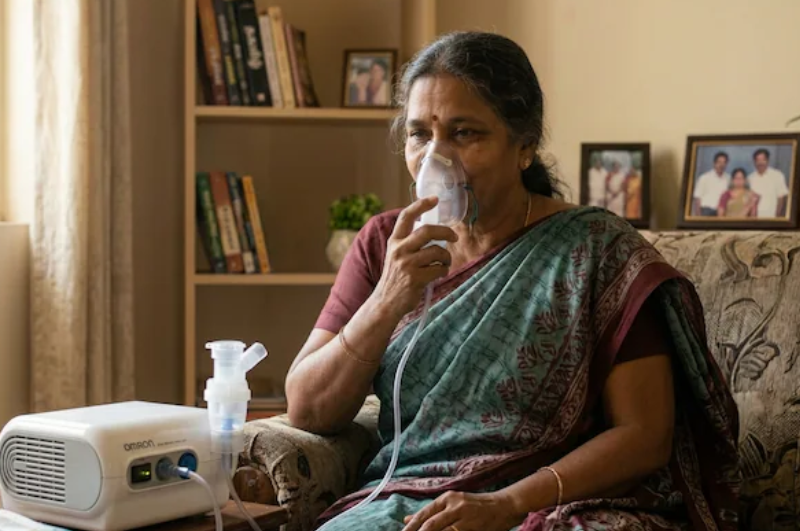
May 4, 2026 (Navroze Bureau) : A new study has found a significant association between frequent nebuliser use and the severity of Chronic Obstructive Pulmonary Disease, raising important questions about treatment patterns and disease progression. The findings suggest that patients relying heavily on nebulisers may already be in more advanced stages of the chronic respiratory condition.
COPD, a progressive lung disease that includes chronic bronchitis and emphysema, is characterized by persistent airflow limitation and breathing difficulties. It is one of the leading causes of morbidity and mortality worldwide, particularly in countries like India where smoking, air pollution, and occupational exposure contribute to rising cases.
Nebulisers are commonly used to deliver medication directly into the lungs in the form of a mist, providing relief during acute symptoms such as wheezing, shortness of breath, and chest tightness. While they are an essential tool in managing respiratory distress, the study indicates that increased dependence on nebulisers may reflect worsening lung function rather than simply a treatment choice.
Researchers analyzed patient data across multiple healthcare settings and observed that individuals who frequently used nebulisers were more likely to have severe COPD, including reduced lung capacity and higher rates of hospitalisation. These patients also tended to experience more frequent exacerbations—sudden worsening of symptoms that can significantly impact quality of life.
“While nebulisers are effective in delivering medication, their frequent use can be an indicator of poorly controlled disease,” a lead researcher noted. “It is important to understand whether patients are using nebulisers out of necessity due to advanced disease or as a substitute for more structured long-term management.”
The study highlights a critical gap in COPD care: early diagnosis and consistent management. Many patients are diagnosed at a late stage when symptoms become severe, limiting the effectiveness of preventive strategies. In such cases, reliance on nebulisers increases as patients seek immediate relief from distressing symptoms.
Experts emphasize that inhalers, when used correctly, are often the preferred method for long-term COPD management. They are portable, cost-effective, and can deliver precise doses of medication. However, improper inhaler technique and lack of patient education can reduce their effectiveness, leading some patients to depend more on nebulisers.
Another factor contributing to increased nebuliser use is accessibility. In some healthcare settings, particularly in rural or resource-limited areas, nebulisers are more readily available in clinics and hospitals, making them a common first-line treatment during acute episodes.
The findings also underscore the importance of personalized treatment plans. COPD management typically involves a combination of medications, lifestyle changes, pulmonary rehabilitation, and regular monitoring. Identifying patients at risk of disease progression allows for timely intervention, potentially reducing the need for frequent nebuliser use.
Environmental factors remain a major concern. Air pollution, which is a significant issue in many Indian cities, exacerbates respiratory conditions and contributes to disease severity. Patients exposed to high levels of pollutants may experience more frequent symptoms, increasing their reliance on nebulised therapy.
The study calls for greater awareness among both healthcare providers and patients. Clinicians are encouraged to assess the underlying reasons for frequent nebuliser use and adjust treatment strategies accordingly. This may include optimizing inhaler therapy, improving patient education, and addressing comorbid conditions.
Patients, on the other hand, are advised not to view nebulisers as a standalone solution. While they provide quick relief, they do not address the underlying progression of the disease. Regular follow-ups, adherence to prescribed medications, and lifestyle modifications such as smoking cessation and exercise are crucial for long-term management.
The integration of digital health tools is also being explored to improve COPD care. Remote monitoring devices and mobile applications can help track symptoms, medication use, and environmental exposure, enabling more proactive management.
Importantly, the study does not suggest that nebulisers are harmful or should be avoided. Instead, it highlights their role as a potential marker of disease severity. When used appropriately, nebulisers remain a vital component of respiratory care, particularly during acute exacerbations.
Healthcare systems are being urged to strengthen early detection programs and expand access to diagnostic tools such as spirometry, which can identify COPD in its early stages. Early intervention can slow disease progression and improve patient outcomes.
In conclusion, the link between nebuliser use and severe COPD underscores the need for a more comprehensive approach to respiratory care. By focusing on early diagnosis, patient education, and personalized treatment, healthcare providers can reduce disease burden and improve quality of life for millions of patients living with COPD.
Summary:
A study links frequent nebuliser use with severe COPD, suggesting it reflects advanced disease. Experts stress early diagnosis, proper inhaler use, and better management to reduce dependence and improve patient outcomes.