

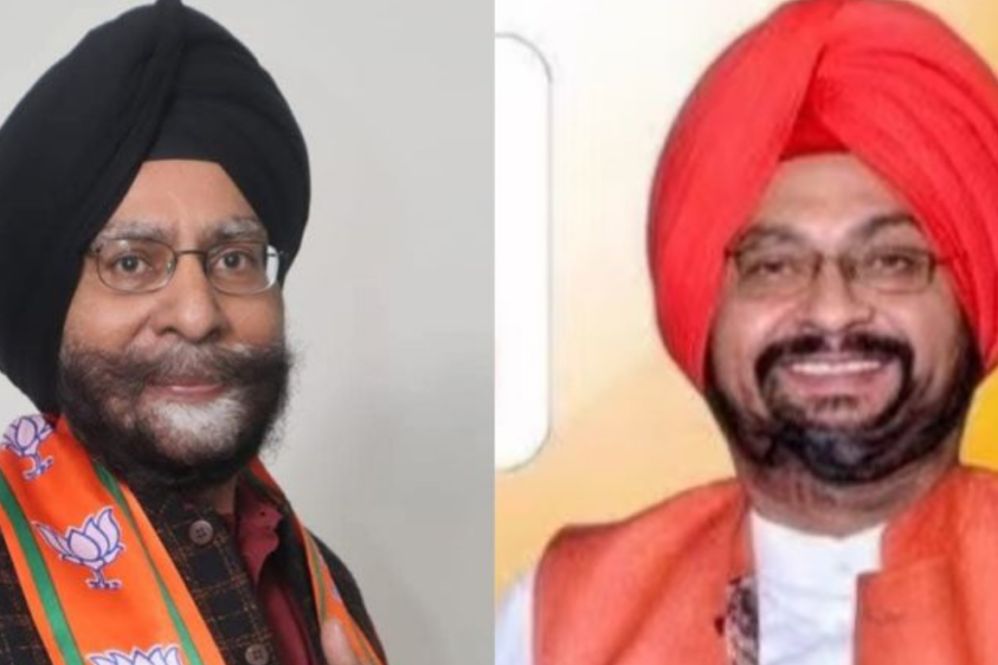
May 21 : 2026 (Navroze Bureau) : The Bharatiya Janata Party is likely to appoint a Sikh leader as the new president of its Punjab unit ahead of the upcoming Assembly elections, a move widely seen as part of the party’s strategy to strengthen its political outreach in the state.
According to political sources and party insiders, the BJP leadership is actively considering several Sikh faces for the top organizational post as the tenure of current Punjab BJP chief Sunil Jakhar approaches its conclusion.
The development assumes significance because Punjab remains India’s only Sikh-majority state, and the BJP has been attempting to expand its independent political base after the breakdown of its long-standing alliance with the Shiromani Akali Dal.
Political observers believe the possible appointment of a Sikh state president signals the BJP’s broader attempt to project a stronger panthic and regional identity in Punjab ahead of the 2027 Assembly elections.
Several names are reportedly under discussion within party circles. These include Union Minister Ravneet Singh Bittu, senior leader Manpreet Singh Badal, and other Sikh BJP figures who joined the party in recent years.
Party strategists reportedly believe that appointing a Sikh face as state president could help improve the BJP’s acceptability among rural and Sikh voters, especially after the political fallout linked to the now-repealed farm laws. Analysts say the BJP has been working steadily to rebuild trust and strengthen its grassroots organization across Punjab.
The BJP’s political strategy in Punjab has evolved significantly over the past few years. Earlier viewed largely as an urban Hindu-centric party in the state, the BJP has increasingly attempted to broaden its appeal by inducting prominent Sikh leaders and emphasizing Sikh representation within the organization.
Sources indicate that the central leadership, including senior party figures, is closely monitoring organizational restructuring in Punjab because the Assembly elections are expected to be politically crucial for the party’s future in the state.
The BJP has also intensified efforts to strengthen booth-level networks, attract influential regional leaders, and improve coordination among party units in preparation for the electoral battle. Political analysts believe leadership changes are likely part of a larger organizational overhaul.
Observers note that the party faces multiple challenges in Punjab, including competition from the ruling Aam Aadmi Party, the Congress, and various Akali factions. The BJP is attempting to position itself as an alternative political force capable of expanding beyond traditional urban strongholds.
Recent political developments suggest that the BJP has been actively encouraging Sikh representation at different levels within the party. Several Sikh leaders from rival parties have joined the BJP in recent years, reflecting the party’s efforts to reshape its image in Punjab politics.
Political experts believe leadership symbolism plays a major role in Punjab’s electoral dynamics, where religious identity, regional representation, and community outreach often influence public perception. A Sikh state president could therefore carry both symbolic and strategic importance for the BJP.
The possible leadership change also comes at a time when Punjab politics is witnessing increasing realignments ahead of the Assembly elections scheduled for early 2027. Parties across the state are reorganizing their structures, strengthening local networks, and preparing for aggressive campaigning.
Meanwhile, BJP leaders have publicly maintained that the party is committed to inclusive representation and organizational expansion in Punjab. Party representatives argue that the BJP’s growing presence among Sikh leaders reflects increasing confidence in its national leadership and development agenda.
The tenure of Sunil Jakhar as Punjab BJP chief is expected to formally conclude soon, although party officials have not yet announced a final decision regarding succession.
Analysts say the appointment of a Sikh president could help the BJP strategically counter criticism from opponents who often portray the party as disconnected from Punjab’s socio-political landscape. The move may also strengthen the BJP’s efforts to gain support in rural constituencies where it traditionally faced challenges.
At the same time, opposition parties are likely to closely watch the BJP’s organizational decisions and electoral positioning in the coming months as political activity intensifies across Punjab.
With Assembly elections drawing closer, leadership restructuring, alliance calculations, and community outreach efforts are expected to dominate Punjab’s political landscape, making the BJP’s next organizational appointment particularly significant for the state’s evolving political equations.